The Future of Science must be Female

Women in Science

The Future of Science must be Female

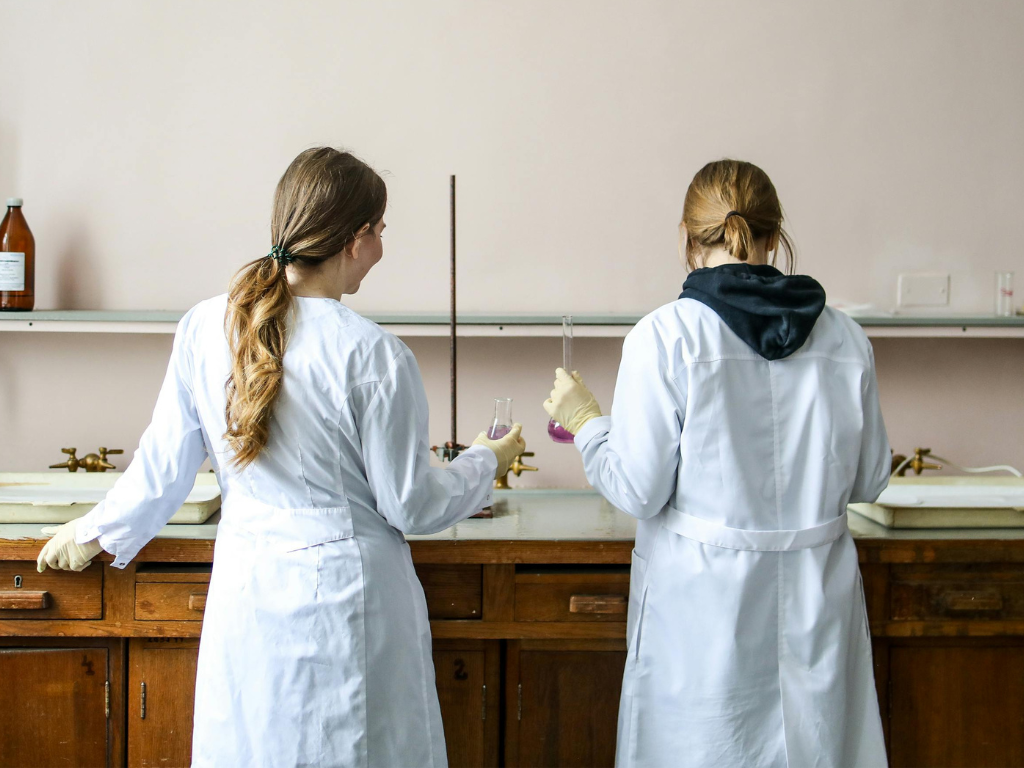
For too long, science has been defined by only half of the population. Now we realize that this led to a biased understanding of the universe, and the time to change the narrative has come. 

As a women-owned Strategic Science Communication agency, Norasy understands that gender diversity in research isn’t just a number to show proudly: it is the cornerstone of a new approach to research. 

On 11 February 2026, the world observes the International Day of Women and Girls in Science

This year’s assembly theme, “Synergizing AI, Social Science, STEM, and Finance: Building Inclusive Futures for Women and Girls”, moves the conversation from simply encouraging girls to study science toward a systemic change to enable women to not only pursue a career in science but also to keep pushing the boundaries towards a successful representation of women in science. 

The 2026 vision: a four-pillar approach

The 2026 IDWGIS theme recognizes that we cannot close the gender gap with STEM education alone. We need a synergy of four critical domains:

1. Artificial Intelligence (AI)

AI is currently reshaping the global economy, offering powerful tools for health diagnostics and climate modelling. Yet, only one in five professionals (22%) in AI is a woman. This is a crisis of design. Without women in the driver’s seat, algorithms risk perpetuating historical biases. Gender-responsive AI governance is essential to ensure that the digital future does not automate the inequalities of the past.

2. Social Science

Social science provides the “human software” for technical hardware. It guides the design of equitable policies and helps researchers understand why certain innovations fail to reach marginalized groups. It is the bridge that ensures STEM solutions are culturally competent and accessible.

3. STEM Disciplines

While we need technical skills to build the future, we also need diverse teams to maintain it. The goal is to foster gender-balanced research teams that can develop solutions relevant to the entire population, not just a select demographic.

4. Finance

Perhaps the most pragmatic pillar is finance. Financial mechanisms, such as impact investing, blended finance, and gender-smart funds, are critical. They unlock the capital needed to scale women-led startups and provide sustainable funding for Research & Development (R&D) that prioritizes social inclusion as a key performance metric.

The glass ceiling and the leaky pipeline

Despite decades of advocacy, the statistics remain stark. According to UNESCO, women make up less than one-third (31.1%) of the world’s researchers.

While young women are actually more likely than men to pursue higher education globally (46% vs. 40%), a disconnect occurs between graduation and career advancement. This is the “leaky pipeline.” Women graduate, but they do not stay.

For those who remain, the glass ceiling in research careers is formidable. It manifests as a lack of tenure, lower citation rates, and a scarcity of leadership roles in high-stakes fields.

When women are excluded from leadership, the direction of scientific research shifts away from issues that disproportionately affect women.

The data gap: exposing the “Invisible Women”

At Norasy, we often talk about the importance of the “Gender dimension” in research. This isn’t political; it’s mathematical. If your dataset is biased, your results will be biased as well.

No one has articulated this better than Caroline Criado Perez in her book, Invisible Women: Exposing Data Bias in a World Designed for Men.

Criado Perez exposes a “default male” bias that permeates our world. Because women are underrepresented in research, both as scientists and as test subjects, we exist in a society that fails to account for female physiology and experience.

The examples speak for themselves: 

  • Medical safety: Drugs are often tested on male cells and animals, leading to adverse reactions in women that are dismissed as “atypical.”
  • Car safety: Crash test dummies have historically been modelled on the average male body, leaving women more vulnerable to serious injury in accidents.
  • Tech design: Voice recognition software and AI often struggle with female voices because they were “trained” on male datasets.

This is why the 2026 theme of synergizing AI and Social Science is so critical. We are not just fighting for jobs; we are fighting for data equity.

We need women in the lab to ask the questions that men might not think to ask. We need women in AI to spot the bias in the code before it is deployed.

Norasy: We root for inclusive science

At Norasy, we are proud to be a women-owned company navigating the intersection of science and strategy. We know that diverse teams produce more robust, creative, and effective solutions.

On this International Day of Women and Girls in Science, we commit to continuing our work: helping organizations articulate the value of diversity, translating complex data into inclusive stories, and ensuring that the “Invisible Women” of data become the visible leaders of tomorrow.

The future of science is not just about new technologies. It is about inclusive futures. It is about ensuring that when we look at the data, we see the whole picture and the whole population.

Are you ready to make your science communication more inclusive? Contact Norasy today to see how we can help you bridge the gap.

Latest Posts

From research to impact

From research to impact

From research to impact: how to transform knowledge into action Groundbreaking discoveries often happen in the laboratories, yet

Science Communication matters

Why science communication matters in 2025: maximizing research impact In the current global research landscape, breakthroughs are happening

Turning research into impact

Turning research into impact: why science communication is the key to progress At NORASY, we believe that science

From research to impact

From research to impact

From research to impact: how to transform knowledge into action

Groundbreaking discoveries often happen in the laboratories, yet the journey towards a tangible societal benefit is rarely a straight line. Many revolutionary ideas remain locked behind the paywalls of academic journals, never reaching the policymakers or industry leaders who could put them into practice.

To bridge this divide, researchers must move beyond simple publication and embrace a comprehensive approach to research dissemination. This is where the transition from “knowing” to “doing” begins.

The challenge of knowledge transfer

In the current scientific landscape, particularly within the framework of European projects such as Horizon Europe, the success of a study is no longer measured solely by its h-index or the prestige of the journal in which it appears. Instead, funding bodies and global institutions are looking for research impact: the demonstrable contribution that research makes to the economy, society, culture, public policy, or services.

Achieving this impact requires a strategic shift. Knowledge transfer is not just about handing over a report: it is an active, ongoing process of ensuring that scientific insights are translated into a language and format that non-experts can utilize.

Developing a robust science communication strategy

At NORASY, we believe that communication should never be an afterthought. A successful science communication strategy acts as a blueprint, guiding how information flows from the researcher to the stakeholder.

To transform knowledge into action, your strategy must address three core pillars:

  1. Identifying key messages
    Scientific data is often dense and nuanced. For research to have an impact, it must be distilled into “actionable insights.” This doesn’t mean “dumbing down” the science; it means highlighting the relevance. What problem does this solve? Why does it matter now?
  2. Defining target audiences
    Not all research is meant for everyone. A strategy must distinguish between:
    • Policy makers: they need evidence-based briefs to draft legislation.
    • Industry leaders: they look for scalable innovations and technical feasibility.
    • General public: they seek to understand how research affects their daily lives.

3. Choosing effective dissemination channels
While peer-reviewed papers are essential for academic credibility, they are rarely the best way to reach a local government official or a tech entrepreneur. Effective dissemination involves a multi-channel approach, including policy briefs, interactive webinars, public engagement campaigns, and digital storytelling.

Transforming knowledge into action: the NORASY approach

At NORASY, we specialize in helping researchers and institutions navigate the complexities of the modern research ecosystem. We don’t just help you talk about your work; we help you ensure your work works for the world.

Our methodology focuses on creating clear pathways from discovery to implementation. Whether you are working on a large-scale European project or a niche technological study, our goal is to ensure your outputs are understood, valued, and, most importantly, applied.

Why research impact matters for the future

The world is facing unprecedented challenges, from climate change to public health crises. In these contexts, the “ivory tower” model of academia is no longer sustainable. Society requires a return on its investment in science.

By focusing on transforming knowledge into action, researchers can:

  • Increase funding potential: Demonstrating past impact is a key requirement for securing future grants.
  • Drive innovation: Facilitating the leap from theory to commercial or social application.
  • Influence policy: Providing the evidence needed to solve complex societal issues.
Your research, amplified

The path from research to impact is paved with strategic communication. It requires a move away from passive dissemination and toward active engagement. With a tailored science communication strategy, your findings can break through the noise, reaching the people who have the power to implement change.

At NORASY, we are dedicated to ensuring that your knowledge doesn’t just sit on a shelf; it changes the world.

Are you ready to maximize the reach of your next project?


Latest Posts

Women in Science

The Future of Science must be Female

The Future of Science must be Female For too long, science has been defined by only half of

Science Communication matters

Why science communication matters in 2025: maximizing research impact In the current global research landscape, breakthroughs are happening

Turning research into impact

Turning research into impact: why science communication is the key to progress At NORASY, we believe that science

Science Communication matters

Why science communication matters in 2025: maximizing research impact

In the current global research landscape, breakthroughs are happening at an unprecedented pace. However, in 2025, a brilliant discovery is only half the battle. To truly succeed, institutions and researchers must answer a critical question: How does this work benefit society?

This is where science communication transitions from a “nice-to-have” to a strategic necessity. At NORASY, we help researchers move beyond publication and toward real-world influence.

The shift from dissemination to strategic Impact

Traditionally, research dissemination meant publishing in journals and presenting at conferences. While these are vital, they often keep knowledge within an academic “echo chamber.” In a competitive funding environment, stakeholders, ranging from citizens to private investors, demand to see the societal relevance of your work.

Expert science communication ensures your research:

  • Influences policy: Translates data into actionable briefs for decision-makers.
  • Fosters public trust: Combats misinformation by making accurate science accessible.
  • Secures funding: Demonstrates a clear path from “knowledge produced” to “impact delivered.”
Navigating complexity with NORASY

Transforming high-level scientific findings into engaging narratives is a complex process. It requires a multidisciplinary team that understands both the rigors of research and the principles of communication.
As a specialized research communication consultancy, NORASY provides the tools to bridge this gap. We focus on:

  1. Audience identification: Who needs to hear your story?
  2. Narrative design: How do we turn data into a compelling vision?
  3. Strategic channels: Is a short-form video, an interactive infographic, or a policy event the best way to reach your goal?
A competitive edge for modern researchers

Prioritizing science communication gives your project a distinct advantage. By expanding your reach beyond the academic community, you open doors to new collaborations, global partnerships, and industry investment.

At NORASY, we don’t just disseminate information: we build the bridge between the lab and the world. In 2025 and beyond, making your knowledge visible is the only way to ensure it becomes meaningful.

Latest Posts

Women in Science

The Future of Science must be Female

The Future of Science must be Female For too long, science has been defined by only half of
From research to impact

From research to impact

From research to impact: how to transform knowledge into action Groundbreaking discoveries often happen in the laboratories, yet

Turning research into impact

Turning research into impact: why science communication is the key to progress At NORASY, we believe that science

Turning research into impact

Turning research into impact: why science communication is the key to progress

At NORASY, we believe that science is more than just data and results: it is the basis for progress. As a science communication agency, our mission is to ensure that scientific results find their way to inspire and drive real change.

The origin of NORASY: from the EU bubble to research papers

The founders of NORASY, Beatriz and Mara, had a similar trajectory: social science and humanities, with an interest in social engagement.
They saw researchers struggling to secure funding despite brilliant ideas, and public policies failing because they lacked scientific grounding. They realized that knowledge only truly matters when it is shared. To bridge this gap, they combined their diverse backgrounds in scientific research, innovation consultancy, design, and international strategy. Today, NORASY operates as a multidisciplinary research communication consultancy that ensures science shines brighter through effective communication, dissemination, and the exploitation of results.

Why your project needs a science communication agency?

In the modern academic and industrial landscape, “impact” is the new gold standard. Whether you are leading an EU-funded project or a private research initiative, you must prove that your work drives sustainability and innovation. Professional scientific dissemination is the tool that makes this possible.

By partnering with NORASY, researchers and organisations can expect:

  • Strategic narratives: we take high-level data and distil it for policymakers, investors, and the general public without losing scientific integrity.
  • Multiformat creativity: we tap into every medium, from animations and infographics to bespoke websites and social media, to make knowledge visible and engaging. We ensure your findings appear where stakeholders are looking.
  • Global reach: science and technology transcend borders. We operate internationally, ensuring your outreach has a global footprint, and we help build public confidence in new technologies.
Why strategic science communication matters

As a dedicated research communication consultancy, we don’t believe in a one-size-fits-all approach. Every project has a unique voice and a specific audience. Our team works side-by-side with universities, innovators, and research institutions to design tailored communication strategies.

Whether we are managing a public outreach campaign or consulting on grant-winning dissemination plans, our goal remains the same: turning research into impact. We help projects move beyond the “echo chamber” of academia and enter the public sphere as tangible, understandable, and actionable solutions.

Partner with NORASY. Science. Shared.

We are more than just a service provider; we are a partner in your research journey. At NORASY, we combine strategy and creativity to turn complex knowledge into clear, compelling stories. With us, you are not just conducting research; you are turning research into impact.

Ready to make your knowledge meaningful? Contact us today to explore how our strategic plans and creative formats can bring your science to the world.